
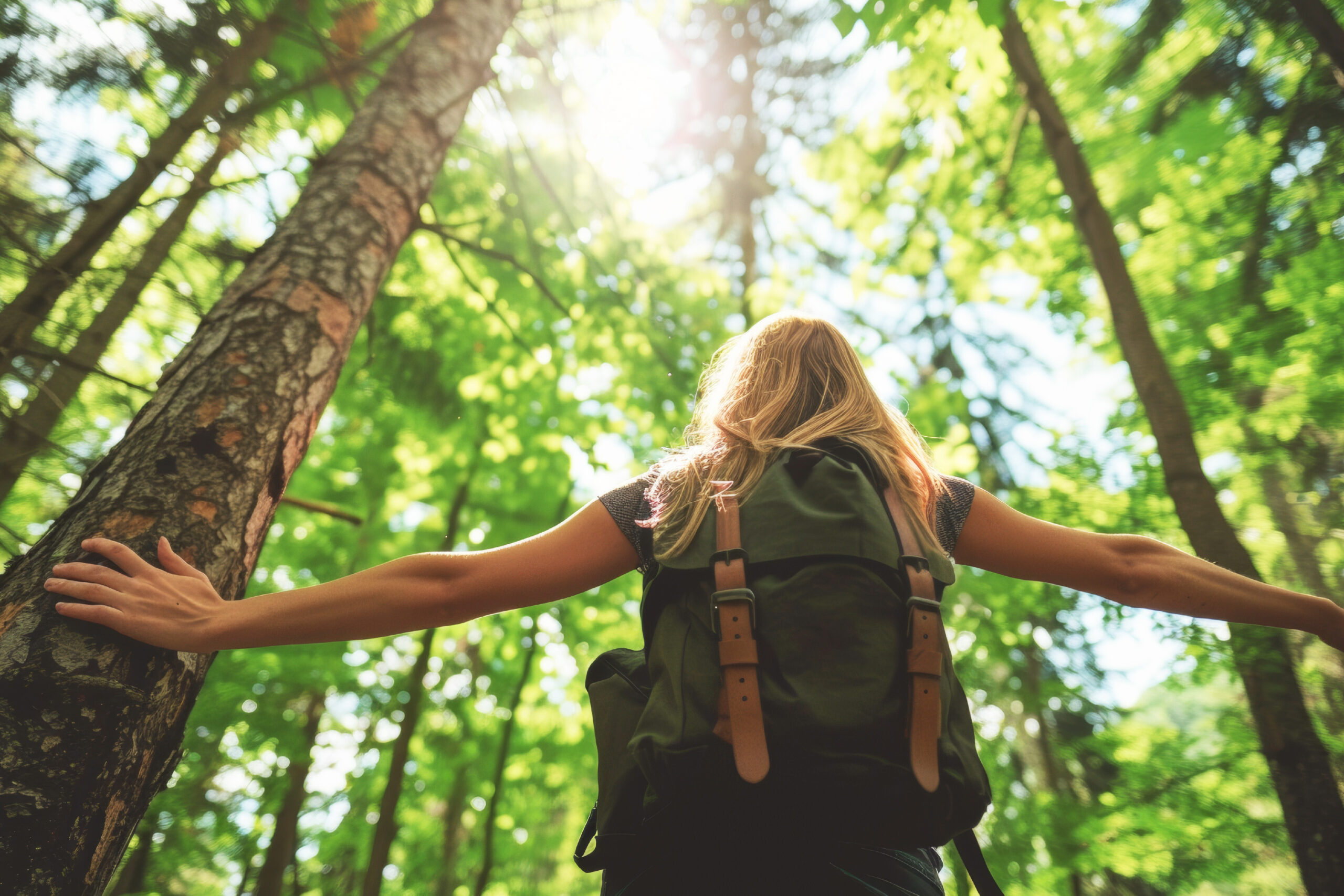


“In every walk with nature one receives far more than he seeks.” (John Muir)
We Are Nature
Nature improves our health. Contact with the environment benefits us in many different ways, both directly and indirectly.
On the one hand, biophilia, as an evolutionary response, explains why we seek to ‘return to our origins’ and perceive natural environments as our own. Moreover, especially in forests, the air contains a large number of chemical substances known as phytoncides. These are volatile organic compounds that trees produce to protect themselves from pests and pathogens, which generate positive physiological changes and provide a sense of well-being.
On the other hand, natural spaces are places free from pollution, noise, and stress factors. This means that our health is benefited by this harm reduction effect. In natural landscapes, there are abundant fascinating shapes, colours and sounds. We can effortlessly perceive them, which causes a restorative effect on our attention span and reduces stress.
Furthermore, while indirect, it is also relevant that natural areas promote an active and healthy lifestyle, thereby acting as boosters for health.
360 Benefits
The positive effects on health can be measured, even short-term. Some research has proven that simply remaining in a forest setting leads to changes in blood pressure and heart rate. Dr Qing Li, an expert in nature medicine, also mentions that forests boost the immune system, even helping to prevent cancer. Along with stress reduction, this helps to prevent several diseases and premature ageing.
Motivated by the effects of isolation and disconnection during the COVID19 pandemic, in 2021, the WHO published an analysis on the benefits for mental health of contact with nature. Furthermore, by promoting non-competitive and group physical activities, it encourages social cohesion. We must not forget that health is not only the absence of disease, but rather a holistic state of physical, mental, and social well-being.
In relation to this total well-being, some studies show that nature appears to promote attention, creativity, and cognitive development in children and stop deterioration in adults. This aspect is also boosted by social cohesion.
Protected Natural Spaces and Well-Being
Exposure to large, well-conserved natural areas has the greatest positive effects on health. For this reason, since the end of the last century, we have been developing initiatives that seek to link protected natural spaces and health policies.
One of the pioneers in this regard is the Australian programme Healthy Parks, Healthy People. Out of concern for maintaining ecosystems and fostering contact with them, they put into practise the green prescription: for the first time, an order to do physical activity in nature.
Spain has some of the greatest biological wealth in the European Union and over 30% of the landmass is protected. We have great resources to make our natural heritage a source of health and general well-being. This is the proposal of EUROPARC-Spain and FUNGOBE, with measures such as: ensuring universal accessibility to these spaces, creating healthcare programmes related to them (like Bosques para la Salud (Forests for Health) by the Regional Government of Castilla y León) and rehabilitating former mountain sanatoriums, many already located in these areas, as facilities to recover from mental and physical conditions. Forest therapy (forest baths or shirin yoku), as well as the green prescription, are also proposals we are seeing in our region. In Catalonia, for example, the Social and Health Prescription Programme is already underway. It includes nature-based activities as part of the resources on offer.
Also, Small-Scale
For decades now, we have known that hospitalised patients recover better and more quickly if they have views of nature through their window. Today, we have transferred this knowledge not only to outside our hospitals, but also to their design and definition: therapeutic gardens, natural spaces for users to enjoy, or simply indoor plants have been proven to improve physical and mental health.
Day-to-Day
Urban hubs are also ecosystems. Having them host greater biodiversity through living green areas, ranging from large city parks to small street tree pits, will allow us to enjoy their many benefits.
Drawing closer to nature allows us to reconnect with ourselves and our well-being. Because, ultimately, we are nature.