
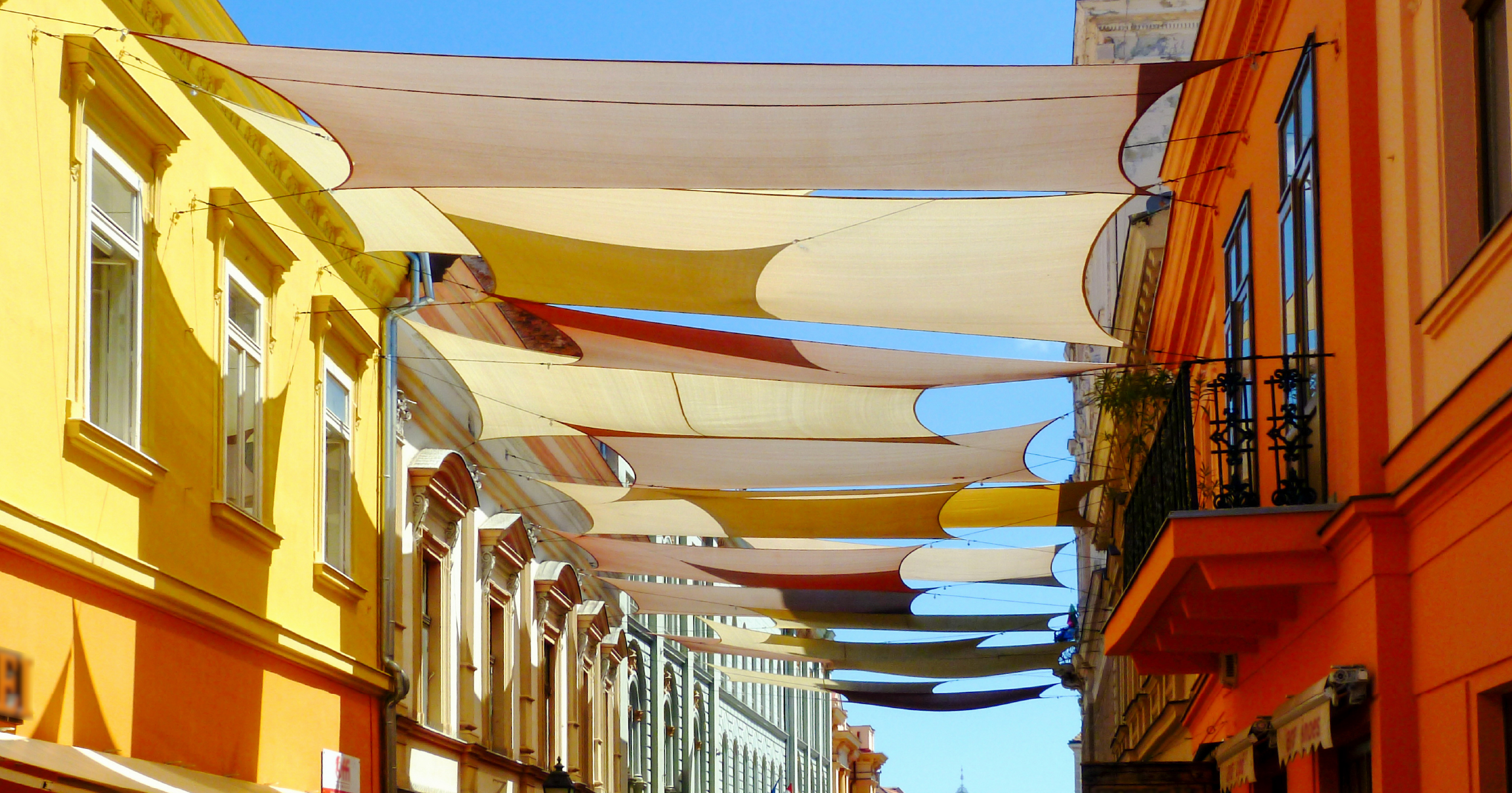
When we think of the cities of the future, we think of friendly spaces, with people at the heart of their design and activity. However, many urban hubs today are not very inhabitable. Especially during the summer, they are both the victim and the cause of the heat island effect. Despite this, the solutions lie in the cities themselves, which we should conceive of as cooler, more inhabitable spaces.
Rising Urban Temperatures
According to a UN report at the end of the last year, 2024 was the hottest year on record, in addition to 41 days of extreme heat. This was the result of climate change. These scorching days and their extreme temperatures are rising faster and are more noticeable in large cities.
Cities act as large heat sinks. Pavement, concrete, brick, and tile absorb the energy from the sun. And elements that block wind passage, such as buildings and narrow streets, prevent ventilation. Moreover, activities inherent to urban life, like travel in motor vehicles, the use of air conditioning equipment, and industrial facilities, let off even more heat.
This means that minimum temperatures (at night-time) are much higher in cities than in peripheral zones. This generates the heat island effect, which means that the thermal difference between cities and the periphery at night can reach up to 10 degrees.
A Spiral of Collateral Effects
This increased temperature also implies greater air conditioning consumption, a financial surcharge, and what matters most, greater emissions into the atmosphere. Heat islands thus also become pollution islands.
This all has an influence on the well-being of inhabitants, especially people with health issues, the elderly, and the least advantaged population. Since this process is especially noteworthy at night, a lack of rest can worsen the situation of these vulnerable groups to an even greater extent.
Re-Thinking Cities to Fill Them with Life
Given this situation, bringing nature back to cities with green and blue infrastructure not only improves the health of inhabitants, but also helps to combat the heat. Water surfaces, such as ponds or foundations (blue infrastructure), heat up more slowly than asphalt or buildings. Trees and areas with plant life (green infrastructure), even in small areas like tree pits and inter-block areas, absorb less energy, cool the air by means of evapotranspiration, remove pollutants and noise, and provide shade. They also capture carbon and improve soil permeability, which helps to keep the ground cooler.
In tandem with vegetation or on their own, installing awnings or shaded areas to reflect solar radiation is a simple and highly effective solution.
By means of sustainable town planning,we can create cooler cities by considering the prevailing winds in the area when designing the construction and location of buildings, or by installing cool pavements: light-coloured surfaces to reflect solar energy instead of absorbing it, and/or permeable ones that promote water infiltration.
Roofs on buildings can also help to reduce the heat island effect with solutions that reduce heat absorption, all while reducing the need for cooling. An example of this are cool roofs, which include both roofs and walls that are painted or covered by light-coloured materials with high thermal emissivity, or green roofs, where a layer of vegetation is installed and maintained. This offers the additional benefits of green infrastructure.
On the other hand, mobility is a strategic element. Providing cities with alternatives to private vehicles under sustainability criteria will improve the efficiency of travel, thereby reducing these vehicles’ contribution to heat islands.
To increase the resilience of cities and healthcare systems, monitoring extreme heat episodes and their consequences will allow us to create models and design measures and alert systems through action plans for heat and health, like the Community of Madrid’s Action Plan for High Temperatures. Actions that allow us to act as a network, like the Cities Refresh campaign, from the European Union’s Covenant of Mayors, are also valuable, as they promote peer learning and help to overcome the collective challenges of the future.
By 2050, 70% of the world’s population will be urban-dwelling, according to the United Nations. Making cities living and inhabitable spaces is no longer a need of the future; it has become a priority of the present.